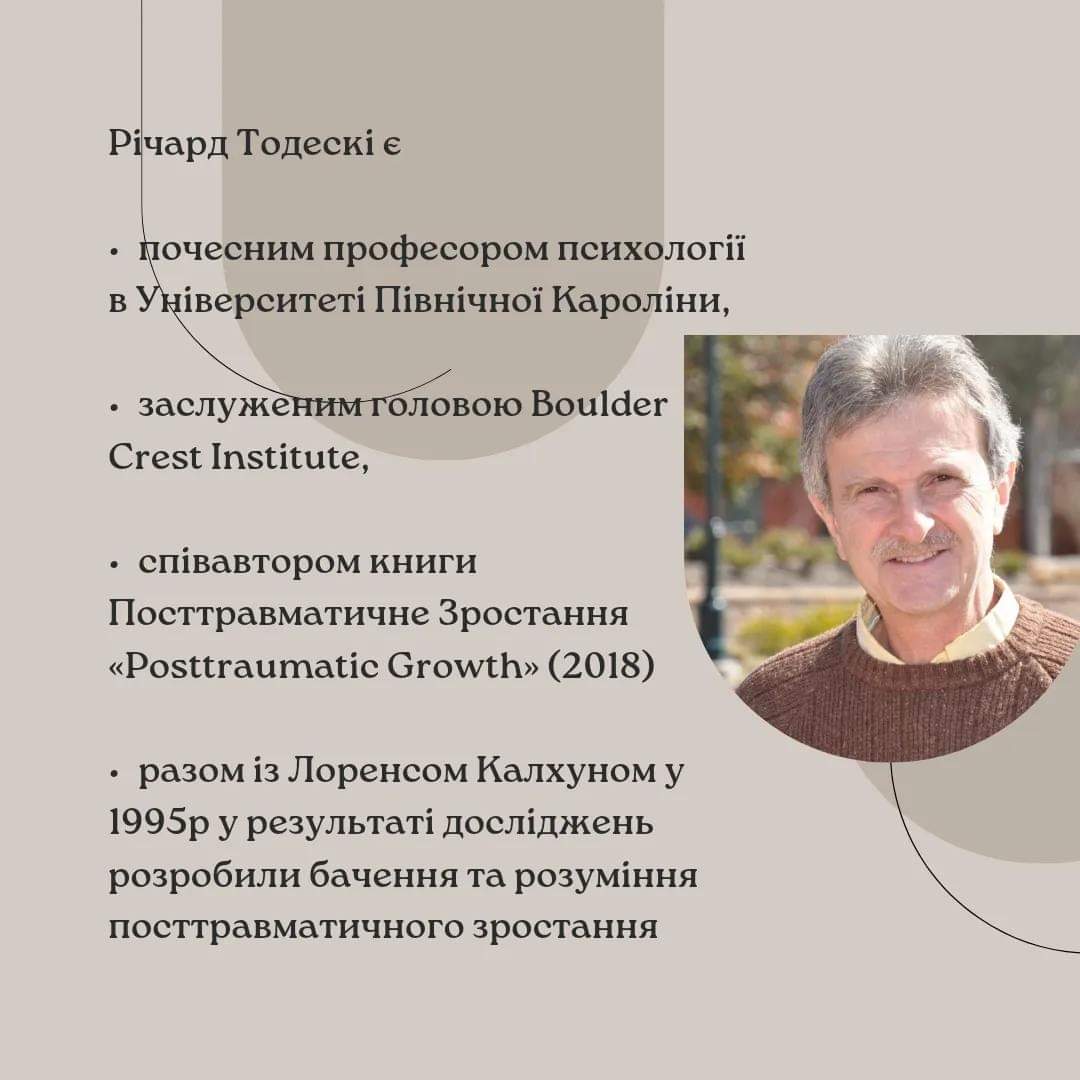
as identified by Dr. Richard Tedeschi, the psychologist who, almost 30 years ago, while studying the response to trauma, introduced this term into psychology:
1. A sense of greater strength.
This is the experience of one’s own strength and power to get through the difficulties and tension that follow. People say that after what they have had to live through, they can get through anything, relying on themselves and their own strength. They develop self-assertion and confidence in their own “I can!”
2. Greater appreciation of life.
People begin to be grateful for every day of life and to value the small things, and they reconsider their priorities. Gratitude was an important component of this aspect.
3. New possibilities and perspectives.
Yes, the traumatic event made certain aspects of life unavailable or lost. However, people find new perspectives in their lives, ones they could not see before.
4. Relationships became deeper.
People begin to show more empathy, compassion and care for others. They become more receptive to another person’s pain and can build deeper connections and relationships.
5. Spiritual and existential change.
People begin to rethink meanings and values. Encountering a traumatic event gives an impulse to revisit the perception of the essence of death and life. People begin to look for answers to big philosophical questions: What is the meaning of living? What is my purpose? What will be valuable?
Dr. Tedeschi noted that in post-traumatic growth some people have all five aspects present, and others one or two. There are many versions and ways of post-traumatic growth, and it is important to notice each of them and to meet it with dignity and respect. It is precisely this focus of attention on growth that becomes a support and an aid.
At the same time, he noted that it is important to understand that:
– Growth after trauma is seen as coming not from the trauma, but from the essence of the person.
– It is NOT the traumatic event itself that helps development, but how the person faced, was tempered by and struggled with this event and its consequences, and how the process of making sense of what happened unfolded.
I am writing this after Dr. Tedeschi’s meeting with Ukrainian psychologists. His book is currently being translated into Ukrainian.